Background
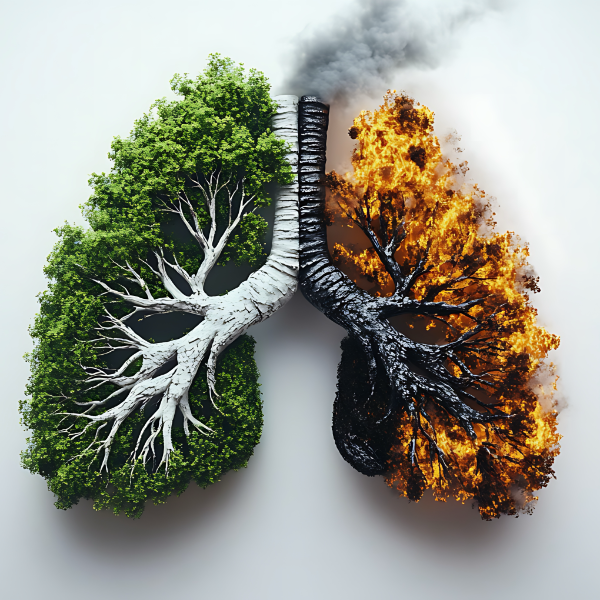
Wildfires are becoming more frequent and more intense, and the smoke they produce reaches communities far from the burn line. Smoke exposure is a recognised driver of respiratory illness — but the microbial cargo that wildfire smoke carries (bacteria and fungi mobilised from soils, vegetation, and burned material) is still poorly characterised. For people living with chronic lung disease, including bronchiectasis and cystic fibrosis, that uncharacterised microbial exposure may matter clinically.
What we are doing
We are characterising the airborne and respiratory microbiome during and after wildfire smoke episodes. The work combines:
- Air sampling during active smoke events,
- Respiratory sampling in patients before, during, and after exposure,
- Sequencing and culture to identify mobilised bacterial and fungal taxa.
A particular focus is on Candida albicans phase transitions under wildfire-smoke conditions, and on environmental drivers of post-exposure colonisation in airways that are already vulnerable.
Why it matters
As wildfire seasons lengthen across western Canada, we need to understand how smoke changes the microbes that reach the lungs - both in the general population and in people whose airways are already susceptible. Characterising that exposure is a foundation for better risk communication, clinical guidance, and protective interventions.